
The Cost of Workplace Slips & the Right Mats to Prevent Them
One in five lost-time injuries in Ontario comes from a fall. Most of those are same-level falls, the slips and trips at floor height that a mat program addresses. Those numbers come from WSIB, compiled by Workplace Safety & Prevention Services.
The mat that should have caught the slip either wasn't there, wasn't the right type, or had saturated hours earlier and quit trapping moisture. Which of those it is depends on where the slip happened and what the mat was up against.
What a Workplace Slip Actually Costs
The average WSIB claim runs $11,771. Factor in lost productivity and replacing the worker's hours, and WSPS puts the real cost closer to $59,000 per injury. WSIB covers the claim itself, but the business still pays through premium adjustments that follow the claim history for years afterward.
Slip-and-fall costs don't stop at the claim; they extend into the operational hit that follows. Someone has to cover the injured worker's shifts, either through overtime or a temp hire. If you're running the business yourself, that coverage comes out of hours you don't have.
If the fall happened in a customer-facing area, there's reputational damage. Property managers feel this particularly hard. One incident in a lobby or hallway triggers tenant complaints, and lease renewals become harder to negotiate.
Liability is the third cost. If the injured worker files a civil suit alongside the WSIB claim, the business has to prove it took reasonable precautions. "We had a mat" isn't enough if that mat was saturated, worn through, or the wrong type for the conditions.
The court wants documentation. Maintenance records, proof that the mat was appropriate for the traffic and weather, and evidence that the business understood what it was responsible for maintaining. That paper trail either exists, or it doesn't.
Where Slips Happen and Why
Entrance areas during wet weather are the most common site. Rain, snow, and slush get tracked in. The mat should capture that moisture before it spreads across the floor, but most mats saturate within hours during heavy traffic.
Once saturated, they stop absorbing and start releasing. The moisture that should have been trapped gets pushed back onto the tile or hardwood the mat was supposed to protect.
Kitchens and food-prep areas are high-risk for various reasons. Grease, water, and food debris create slick surfaces that anti-slip floor mats only help with if they're picked up and cleaned on a schedule that matches the volume. Grease builds up in the fibres faster than general dirt does, and a kitchen mat that isn't laundered regularly becomes part of the slip problem rather than the solution.
Warehouses and manufacturing floors have their own pattern. Slip risk comes from oil, coolant, and fine dust that settles on smooth concrete. Standard mats don't grip well on industrial flooring unless they're built with slip-resistant backing, and they have to stay put when someone pivots or shifts weight quickly. Anti-fatigue mats hold up in standing work zones, but only the ones specifically rated for industrial floors.
Matching the Mat to the Risk
The mat type depends on what's creating the slip risk in the first place. Water and grit at the entrance need a different mat than oil on a warehouse floor, which needs a different mat than the standing fatigue that makes a worker miss a step on the fourth hour of a shift.
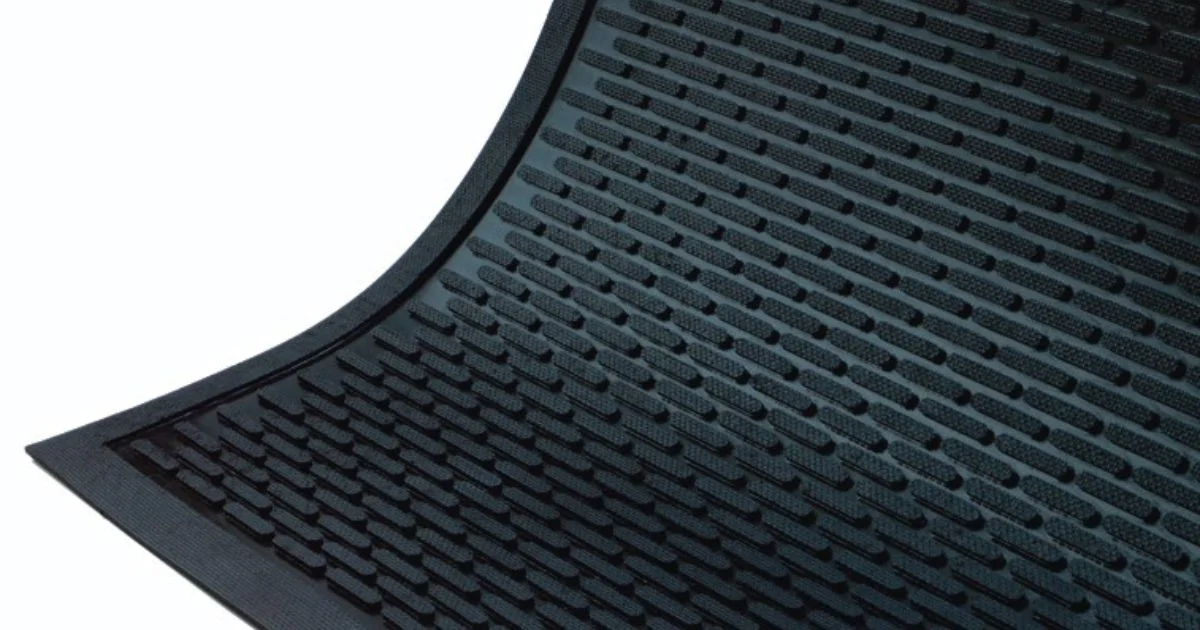
A scraper mat handles the worst of what gets tracked in. It's 100% rubber, with molded recesses that hold water and debris below the walking surface. The slip-resistant backing grips wet tile. These outperform fabric mats in Ontario winters because they don't saturate. Water collects in the recesses and stays there until the mat is picked up and cleaned.
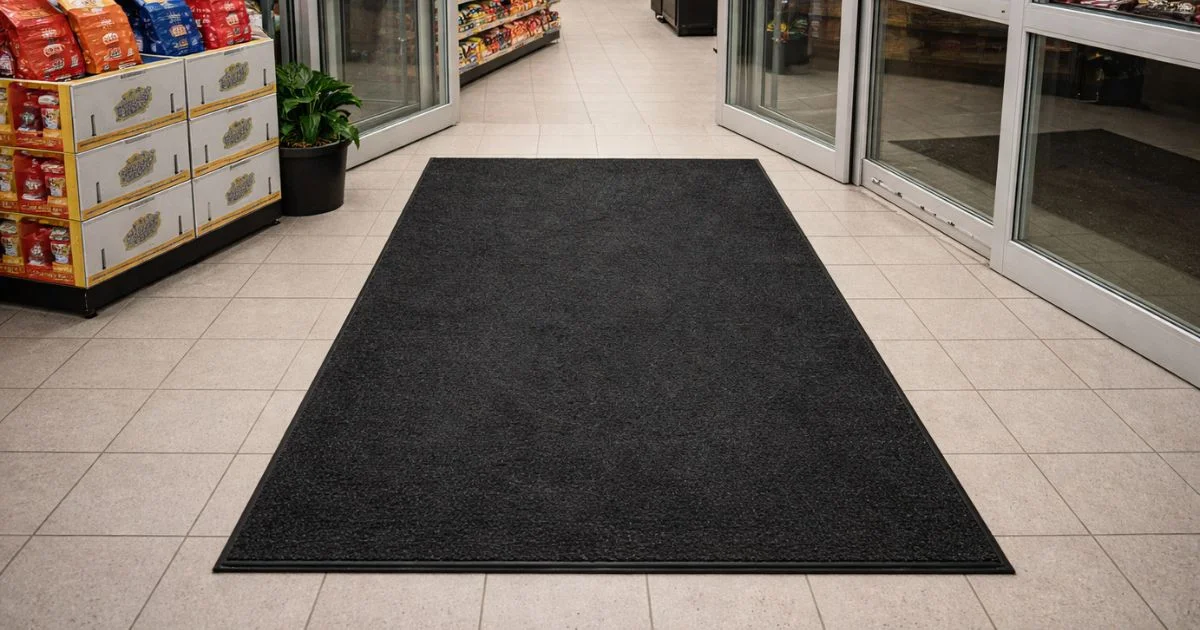
Past the scraper, a fabric mat captures finer dirt and remaining moisture. Sizing is where most businesses get this wrong. A mat narrower than the door lets people step around it entirely, and a mat shorter than three or four foot-strides doesn't give anyone enough room to wipe their feet. If the entrance fabric mat is undersized, the rest of the mat program can't make up for it. There's more on matching mat type and size to each area of a facility if you're working out placement.
Anti-fatigue mats address slip risk from a different angle. Long shifts on concrete can fatigue the legs and lower back, affecting balance and reaction time. A cushioned mat in a standing work area keeps blood flowing through the legs, which keeps the worker alert enough to notice the spilled coolant before stepping in it. Slip prevention often looks like fatigue prevention once you trace the cause back far enough.
Message mats are the last layer, useful when the slip risk is real but the warning is missing. The base of a stairwell, the threshold into a wet loading bay. Visible reminders work in spots where people walk on autopilot.
When Professional Cleaning Matters for Workplace Slip Prevention
Workplace slip prevention falls apart at the cleaning cycle. Vacuuming pulls surface debris but leaves most of what's embedded in the fibres. What's left (moisture, grit, and bacteria) fills the mat's capacity until there's nothing left to trap. That's the same failure the entrance mats hit during wet weather, just slower.
Professional mat cleaning through a rental program handles maintenance without adding to the facility manager's list of tasks. The cost comparison between owning and renting mats usually tips toward rental once laundering and storage are counted.
Clean mats are delivered, and dirty mats are picked up. The business never has to track when a mat needs to be replaced or laundered. That scheduled service matters more in winter, when mats saturate faster from snowmelt and salt residue.
Slip-resistance standards are set by the National Floor Safety Institute, and NFSI certification means the mat meets specific traction thresholds in both wet and dry conditions. That measurement matters because "slip-resistant" without a number doesn't mean anything on its own.
Some mats are slip-resistant compared to ice. Some are slip-resistant compared to wet tile. The certification defines what "resistant" means, which is the only thing that matters when you're explaining to WSIB why the mat at the entrance was adequate for the conditions.
What Gets Missed in Slip Prevention Programs
Most businesses focus on entrance mats and ignore transition areas. The spot where tile meets carpet, where a hallway opens to a lobby, where the loading dock connects to the warehouse floor. Those transitions create slip risk because people don't adjust their stride. A mat at the transition point gives visual and tactile warning that the surface is changing.
Lighting matters more than most facility managers expect. A dark entrance hides moisture on the floor, and a wet spot is invisible if the overhead fixture is burned out or positioned incorrectly. The Canadian Centre for Occupational Health and Safety puts replacing burned-out bulbs on the same housekeeping list as cleaning up spills. A replacement bulb costs a few dollars. The fall it prevents runs into the thousands once the claim and premium adjustment land.
Footwear is the other variable. Steel-toe boots with worn treads don't grip well on wet floors, even with a mat. Some businesses add footwear requirements to their safety programs, especially in manufacturing and warehousing, where oil and coolant are constant. That's outside most facility managers' control, but even the best mat can't compensate for completely smooth boot soles.
The Maintenance Record That Matters
If a slip-and-fall leads to a lawsuit, the court wants proof that the business maintained its slip prevention measures. That means documented mat-cleaning schedules, replacement dates, and evidence that the mats were appropriate for the conditions. A commercial mat rental service provides that documentation automatically because every pickup and delivery gets logged.
Owned mats create a documentation gap unless the facility manager manually tracks cleaning and replacement. Most don't. The mat stays in place until it visibly fails, which means it has stopped preventing slips weeks or months earlier. The gap between when a mat stops working and when it gets replaced is where liability risk lives.
Swan's bi-weekly service handles the cleaning and replacement on a fixed schedule. The business doesn't track wear cycles or decide when a mat needs laundering. Clean mats show up; dirty mats get picked up; and the documentation is available if anyone asks for it. The mat program either runs itself, or it's one more thing you're managing.
Contact us to walk through the entry points with you. We'll match mat types to the actual risk in each area, set the service schedule around the facility's traffic and weather exposure, and the maintenance record builds itself from there.